Molecules in 3D, Part by Part
Real structures from the Protein Data Bank and PubChem, to turn, zoom and walk through one view at a time. Press any part to see what it does; every name leads to its dictionary entry.
Proteins and nucleic acids
The large molecules of life, each from a crystal structure in the Protein Data Bank: the atoms where the experiment placed them.
Nucleic acid · PDB 1BNA
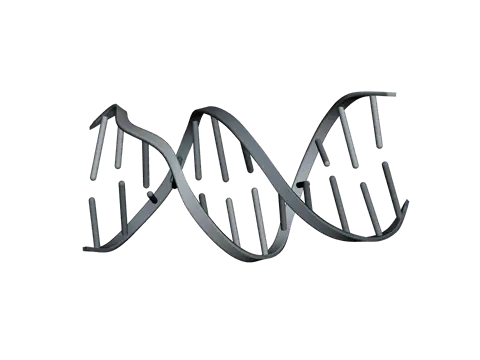
DNA Double Helix
Two strands of DNA wound round each other, held together by base pairs: twelve of them here, about one full turn of the double helix.
Turn it in 3D7 partsProtein · PDB 4HHB
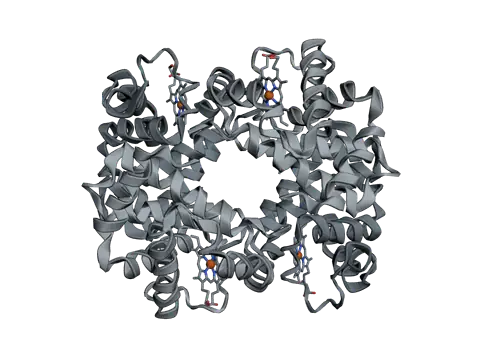
Hemoglobin
The protein that carries oxygen in red blood cells: four chains, each holding a haem group whose iron binds one oxygen molecule.
Turn it in 3D9 partsProtein · PDB 1MSO
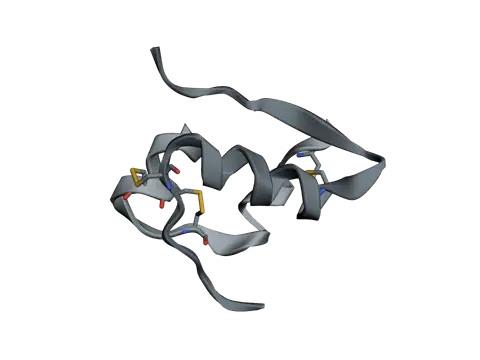
Insulin
The hormone that lowers blood glucose: a small protein of 51 amino acids in two chains, A and B, joined by disulfide bonds.
Turn it in 3D6 partsProtein · PDB 1IGT
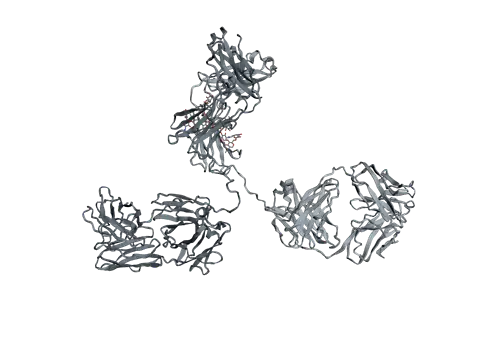
Antibody
A Y-shaped protein of the immune system: two arms that bind a target, and a stem that calls in the cells and proteins that destroy it.
Turn it in 3D9 partsProtein · PDB 1BKV
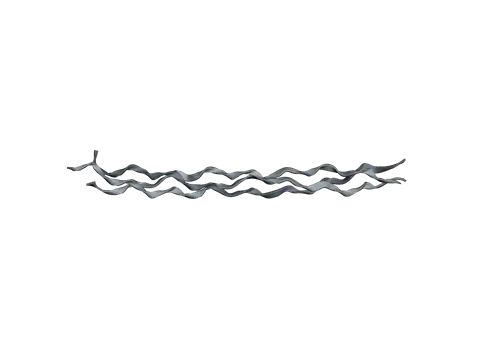
Collagen Triple Helix
The most abundant protein in mammals: three chains wound into a rope-like triple helix, with glycine at every third position.
Turn it in 3D7 partsProtein · PDB 1EMA
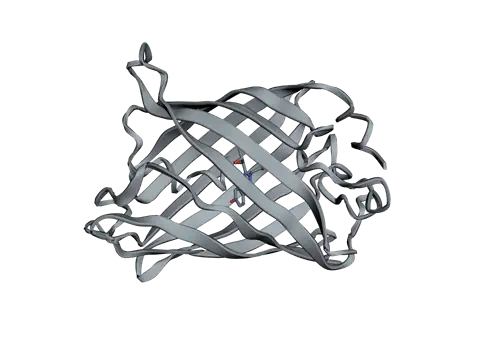
Green Fluorescent Protein
The jellyfish protein that glows green: a barrel of eleven beta strands around a chromophore it makes from three of its own amino acids.
Turn it in 3D5 partsProtein · PDB 1BL8
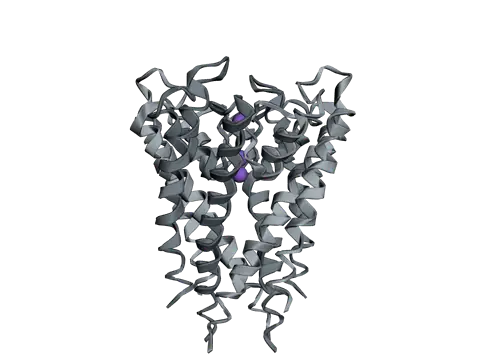
Potassium Channel
A pore in the cell membrane that lets potassium ions through in single file, about ten thousand times more readily than sodium.
Turn it in 3D7 partsNucleic acid · PDB 1EHZ
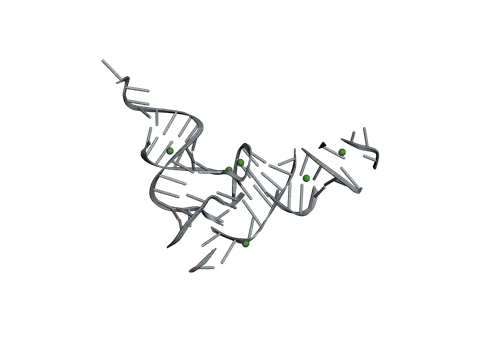
Transfer RNA
The adaptor of protein synthesis: an L-shaped RNA of 76 nucleotides that reads a codon at one end and carries an amino acid at the other.
Turn it in 3D9 partsProtein and DNA · PDB 1KX5
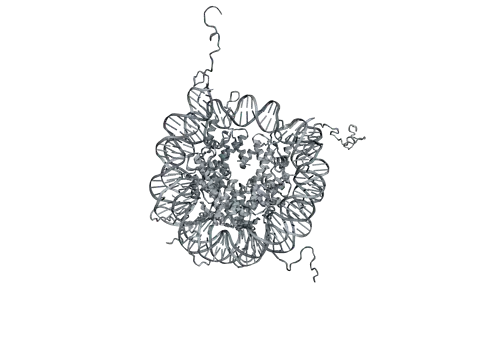
Nucleosome
The first step in packing DNA into chromosomes: 147 base pairs of DNA wrapped almost twice round a core of eight histone proteins.
Turn it in 3D6 parts
Small molecules and drugs
Fuels, signals and medicines, each from PubChem's 3D model, with every atom and bond, hydrogens too.
Small molecule · PubChem CID 5957
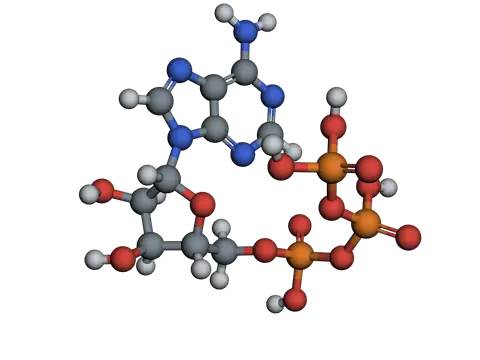
ATP
The cell's energy currency: adenine and a ribose sugar carrying a chain of three phosphates; splitting off the last one with water releases energy.
Turn it in 3D5 partsSmall molecule · PubChem CID 64689
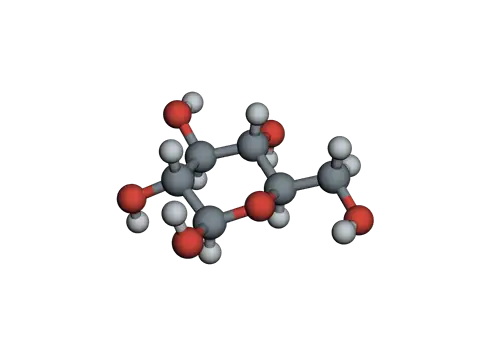
Glucose
The main sugar fuel of cells: six carbons, five of them closed into a ring with an oxygen, and a hydroxyl group on almost every carbon.
Turn it in 3D5 partsSmall molecule · PubChem CID 2519
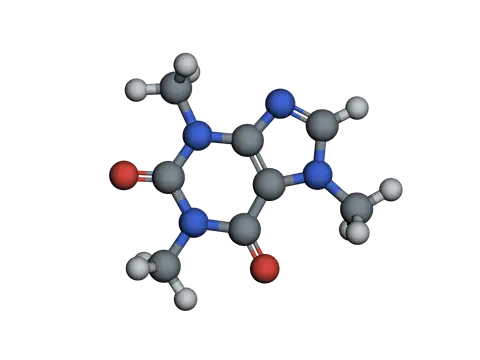
Caffeine
The stimulant in coffee and tea: a flat purine with three methyl groups, close enough in shape to adenosine to block its receptors.
Turn it in 3D4 partsSmall molecule · PubChem CID 2244
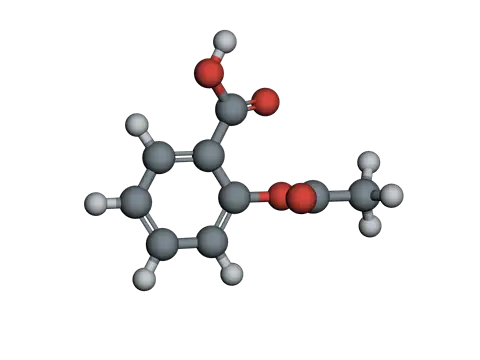
Aspirin
A painkiller that works by giving away part of itself: aspirin hands its acetyl group to the enzyme that makes prostaglandins, and stops it for good.
Turn it in 3D4 partsSmall molecule · PubChem CID 5904
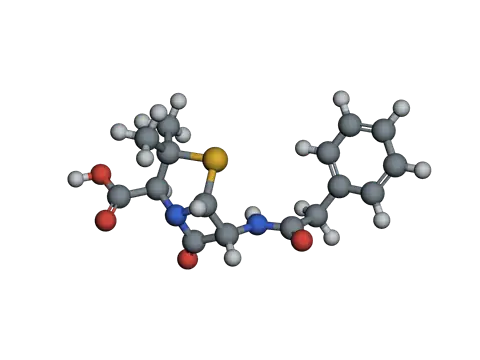
Penicillin G
A natural penicillin still given as a medicine: a strained four-membered beta-lactam ring that jams the enzymes bacteria use to build their cell walls.
Turn it in 3D4 parts